
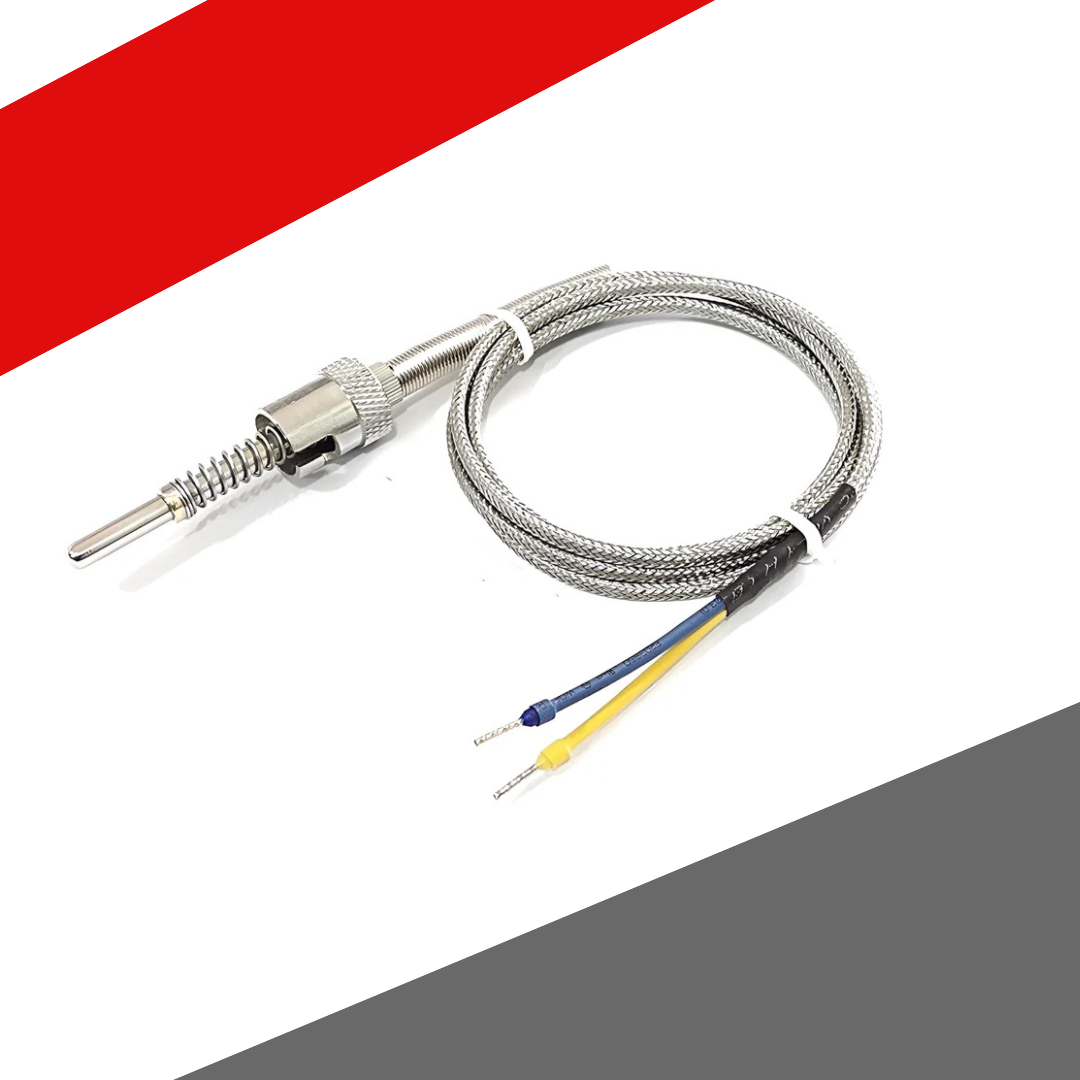
In industrial heating systems, temperature measurement directly influences process control, product quality, and equipment safety. Therefore, for thermocouple sensors to provide reliable measurements in real-world application conditions, it is imperative that one considers more than cost when selecting a good manufacturer such as Hindon Heater. Thermocouple metallurgy, insulation, sheathing, calibration, and application engineering become important considerations.
Steps to Identify a Reliable Thermocouple Sensor Manufacturers
1. Check Thermocouple Element Quality
The sensing element is the core of a thermocouple. Reliable manufacturers use suitable thermocouple alloys and maintain proper polarity, junction construction, and dimensional consistency.
Common thermocouple types include:
| Type | Typical Application Advantage |
| Type K | General industrial heating and high-temperature applications |
| Type J | Furnaces, ovens and process equipment |
| Type T | Lower-temperature and moisture-sensitive applications |
| Type R/S | High-temperature applications requiring stable measurement |
| Type B | Very high-temperature industrial processes |
The correct type should be selected according to temperature range, process atmosphere, accuracy requirements, and installation conditions.
2. Evaluate Sheath and Insulation Construction
The reliability of the sensor is highly dependent on the method of protection. Different constructions can be used for different processes, like metal or ceramic sheaths, mineral insulation, and so forth.
When it comes to high temperatures, the selection of the sheath, the insulation resistance, the size of the probe, and its junction become highly important. A reputable manufacturer should provide recommendations depending on the specific process conditions.
3. Ask About Calibration and Testing
Temperature accuracy cannot be judged by appearance alone. A reliable manufacturer should have defined inspection and testing procedures for thermocouple sensors.
Important checks may include:
- Continuity and polarity verification
- Insulation resistance testing
- Dimensional inspection
- Junction integrity
- Temperature calibration or comparison testing
- Verification against applicable thermocouple standards
Consistent testing helps reduce measurement errors and improves process repeatability.
4. Look for Application-Specific Customisation
There are several aspects that must be considered when designing sensors for industrial applications, such as probe length, diameter, mounting thread, terminals, cables, connections, and protection tube.
A well-established Thermocouple Sensor Manufacturers would be able to design such characteristics with regard to the equipment and installation site. Customisation is especially important for sensors used in furnaces, ovens, dies, heaters, pipes, etc.
5. Assess Manufacturing Capability and Technical Support
A reliable manufacturer must be in control of certain key aspects like the preparation of the elements, insulation, assembly, termination, testing, and finally inspection. Technical support is equally crucial.
The manufacturer must be in a position to guide the user on the types of thermocouples, the shape of the junction, the protective materials, depth of insertion, response time, and operating temperatures.
Best Thermocouple Sensor Manufacturers – Hindon Heater
Hindon Heater provides industrial temperature-sensing solutions with an application-oriented approach to thermocouple selection and construction. Taking into consideration all of these factors, such as operating temperature, installation, protection, and measurement conditions, we stay concentrated on providing sensors designed for challenging industrial applications.
For businesses that require accurate temperature readings and reliable sensor operation, collaborating with a professional thermocouple sensor manufacturers, such as Hindon Heater, will be of great benefit.