
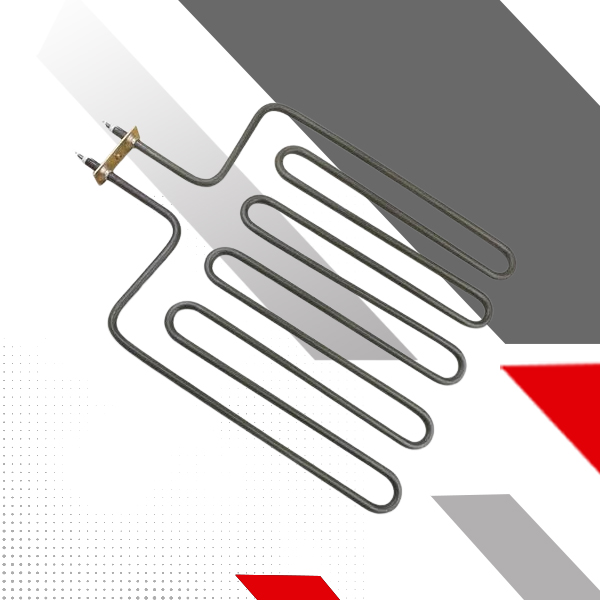
Watt Density is among the most crucial factors in designing a tubular heater. This factor determines the amount of electrical power used per unit area of the heater, hence affecting such things as heating rate, surface temperature, energy transfer, and lifetime of the heater. For Tubular Heater Manufacturers such as Hindon Heater, choosing the right watt density is vital.
What Is Watt Density?
Watt density is the electrical power applied per unit area of the heated portion of a tubular heater.
Formula:
Watt Density = Heater Wattage ÷ Heated Surface Area
It dictates the extent of heat transfer from the heating element surface into the medium around it. High watt density results in quick heating, while low watt density will result in slow and even heat transfer.
How High vs. Low Watt Density Affects Performance?
High Watt Density:
High watt density is ideal when there is a need for fast heating and small heaters.
- Faster heating: Provides more heat in a small surface area.
- Higher surface temperature: It is ideal where the application needs rapid thermal transfer.
- High thermal stress: If the surroundings are not able to take in heat effectively, high surface temperatures will cause accelerated oxidation and failure of the heater.
Low Watt Density:
A low watt density is ideal when there is a need for temperature uniformity and durability of equipment operation.
- Reduced heat transfer: Avoids local hot spots.
- Surface heat reduction: Minimizes oxidation, scaling, and thermal stress.
- Increased longevity: Operating at lower temperatures may lead to reduced degradation of the heating element and insulation.
Impact on Service Life and Failure Mechanisms
- Thermal Stress Inside: The high operating temperatures create thermal stresses in the resistance wire, insulation, and metal sheath.
- Oxidation: High operating sheath temperatures will accelerate oxidation and decrease the life of the heater.
- Scaling and Fouling: When used in water or process service, higher surface temperatures contribute to scaling and fouling. In oil service, they result in localized burning or carbonization.
- Insulation Failure: Repeated overheating decreases dielectric strength, resulting in eventual failure.
Matching Watt Density to the Heating Medium
Watt density should always be selected according to the application:
| Heating Medium | Typical Consideration |
| Water | Higher watt density may be possible with adequate circulation and temperature control. |
| Oil & Hydrocarbons | Lower watt density is generally preferred to prevent localized overheating. |
| Air & Gas | Requires careful consideration of airflow, velocity, and heater surface temperature. |
| Viscous Media | Lower density helps compensate for limited heat transfer and circulation. |
Conclusion
There is an appropriate watt density, which is dependent on the medium used, working temperature, space available, heat transfer environment, circulation, and the heating rate that is needed. The right design of the tubular heater takes all these into consideration instead of maximizing watt density. This is what Tubular Heater Manufacturers, such as Hindon Heater, will assist you in identifying.